


Stickman Defense: Survival TD
Pusilung
Stickman Defense: Survival TD is a free strategy game from Pusilung that puts a simple question at the center of each session: can I make the right defensive decision before the next attack overwhelms me? I spent time with it as the kind of game I would open during a short break, then return to when I wanted something more demanding. Its stickman presentation is approachable, but the survival format still asks me to think about timing, positioning, and whether I am reacting to danger or preparing for it.
The basic appeal is easy to understand. I am not looking for a long story or a complicated simulation; I am trying to hold a defensive line through escalating pressure. That makes it a natural fit for players who enjoy tower defense and survival strategy but prefer a lighter visual style. The game is free to start, carries an Everyone 10+ age rating, and works on Android devices running version 7.1 or later. It has also attracted over 500 thousand installs and an average rating of 4.7 from around 7.9 thousand ratings, so it clearly has an audience beyond a handful of curious downloads.
What the first sessions feel like
The first thing I noticed is how quickly the game communicates its central rhythm. There is pressure, there is a defensive response, and there is a constant temptation to spend attention on the threat directly in front of me instead of planning for the next one. That makes the opening approachable without making the longer session completely automatic. I could understand what I was trying to protect, yet I still had to decide when a response was worth using and when it was better to wait.
That distinction matters in a survival defense game. A player who treats every incoming threat as an emergency can end up making inefficient choices, while a player who waits too long may lose the chance to recover. I found the most satisfying moments came from recognizing a dangerous pattern early and acting before the situation looked desperate. The game rewards awareness more than frantic tapping, although the pressure can still feel brisk when several problems arrive close together.
The stickman art helps keep the presentation readable. It does not ask me to learn a dense visual language before I can play, and the uncluttered style suits short sessions on a phone. At the same time, anyone expecting a deep, story-heavy strategy experience may find the presentation deliberately modest. This is about the defensive challenge first, not about character drama or a large fictional world.
Related News






One practical point is that the game feels most comfortable when I approach each attempt as a small planning exercise rather than a test of speed. I watch what is happening, identify the part of the defense that is under the most pressure, and avoid changing several things at once without understanding the result. That habit is more useful here than simply repeating the same actions and hoping the next run turns out differently.
Where players are likely to get stuck
The first common sticking point is the change from an easy opening to a more demanding survival sequence. Early success can create the impression that the game will continue to play itself, but that approach becomes unreliable once the pressure rises. I had better results when I treated the first calm moments as preparation time. Instead of spending every available option immediately, I kept enough flexibility to respond when the defensive line began to weaken.
A second obstacle is poor prioritization. It is natural to focus on the most visible attacker, yet the most obvious target is not always the one creating the greatest risk. A threat that is close to the defense may deserve attention, but so may a less dramatic problem that is steadily reducing the room I have to recover. I learned to ask which danger would leave me with fewer choices if I ignored it for a little longer.
Gallery
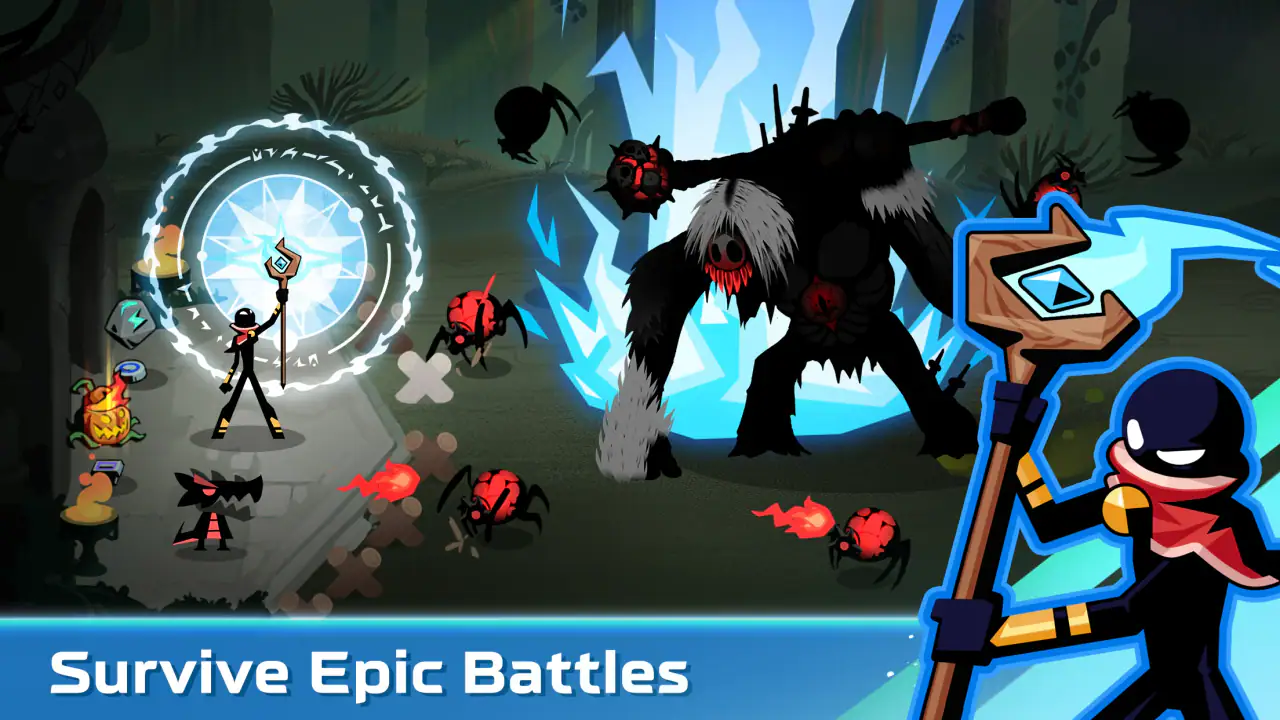
Another source of frustration is restarting without changing the plan. Repeating an attempt can be useful, but only if I can identify what failed. Was the response too early? Did I concentrate on one side while allowing another weakness to grow? Did I spend a useful resource simply because it was available? These questions turn a failed run into information. Without that reflection, the game can feel unfair even when the real issue is an unchanged strategy.
Short sessions can also encourage rushed decisions. If I open the game while distracted, I may react to the first visible problem and miss the larger pattern developing behind it. My practical advice is to begin a run when I can give it a few uninterrupted minutes. The game is casual in presentation, but the defensive decisions are less forgiving when my attention is divided.
Setup checks before blaming the game
Because this is a mobile game, I would start with the simple checks before assuming that a difficult session or an awkward launch is a software problem. The current version is 1.0.569, and the stated minimum Android requirement is 7.1. If the device is older than that requirement, or if the operating system is behaving poorly in general, updating the phone and checking available storage is a sensible first step.
I would also close other demanding apps before playing, especially on an older handset. That is not a special requirement advertised for this title; it is a practical way to reduce background pressure on any phone. If the game feels sluggish, I would first compare its behavior after a fresh device restart. A restart can separate a temporary phone issue from a repeatable problem inside the game.
Installation is another point where patience helps. I would use the official app store route, wait for the installation to finish completely, and avoid opening the game while the device is still completing system updates or other downloads. If an update appears available, installing it before beginning a serious session is worthwhile. It prevents me from judging an older build when a newer one is already intended for players.
The game is free to download, but it includes optional in-app purchases ranging from $0.99 to $99.99 per item. I would check purchase controls before handing the phone to a child, even though the content rating is Everyone 10+. The age rating describes suitability; it does not replace the need for household purchase settings. This is especially important in a game designed around repeated sessions, where a player may be tempted to buy something after a frustrating attempt.
I would also make sure I know which account and device I am using before making any purchase. That is a general precaution rather than a claim about a particular save or account system. Keeping expectations clear is better than assuming that every game handles progress and purchases in exactly the same way.
Recovering a run that starts going badly
When a defense begins to collapse, my first instinct is to act immediately, but the better recovery method is to pause mentally for a brief scan. I look for the single weakness that is causing several later problems. If I try to fix every visible issue at once, I often waste the options that could have stabilized the situation. A focused response gives me a better chance of regaining control.
I also avoid changing my entire approach after one setback. If a particular response worked earlier, I ask whether the situation truly changed or whether I simply used it at the wrong moment. This is a useful distinction in survival strategy: a good tool can look ineffective when it is deployed too early, while a modest tool can seem powerful when it happens to match the danger perfectly.
For repeated attempts, I recommend keeping a simple mental record of the turning point. I might remember that the defense failed after I committed too much attention to one side, or that I survived longer when I preserved a response for the next wave of pressure. I do not need a spreadsheet to improve. One clear observation per attempt is enough to make the next run meaningfully different.
If the game closes unexpectedly or behaves strangely, I would first reopen it and test whether the issue repeats. Then I would restart the device, confirm that the operating system meets the minimum requirement, and check whether the game has an available update. I would avoid repeatedly clearing app data or uninstalling immediately, because those actions can create their own complications and may affect local progress. Basic troubleshooting is safer when it proceeds from the least disruptive step to the most disruptive one.
Connection-related trouble deserves the same careful approach. If a screen takes longer than expected, I would test the connection with another app, switch between a reliable Wi-Fi connection and mobile data when appropriate, and try again later if the wider service appears unstable. I would not assume that every loading delay comes from the game itself. A temporary network problem can look exactly like a broken app from the player’s side.
When the game may not be the real problem
Some complaints are really about expectations. A player who wants a large campaign, extensive character customization, or a slow, contemplative strategy board may be disappointed even if the game is functioning correctly. Stickman Defense: Survival TD is better understood as a compact survival-defense experience. Its strength is the repeated decision loop, not the promise of a broad role-playing adventure.
It may also be the wrong choice for someone who dislikes pressure and repetition. Survival games naturally ask the player to attempt similar challenges more than once, learn from failure, and improve through better timing. If I want a game that can be completed in a single relaxed sitting with little need to adapt, I would choose a different type of strategy title. A puzzle game with fixed solutions or a slower city-building game may be more comfortable.
On the other hand, players who enjoy optimizing short sessions will probably understand the appeal quickly. I can use a brief break to make a few decisions, then return later with a clearer idea of what I want to improve. Compared with a traditional tower-defense game that may emphasize carefully designed levels and long-term map mastery, this survival format feels more focused on responding to changing pressure. Compared with an idle defense game, it asks more of my attention and gives me less reason to treat progress as completely automatic.
That comparison also reveals the main trade-off. The lighter presentation makes the game easy to approach, but players seeking a highly elaborate strategy system may find it less satisfying than a deeper premium or long-form alternative. Meanwhile, the free entry point is convenient, yet the presence of optional purchases means I would rather establish a personal spending limit before playing regularly. The right choice depends on whether I value quick defensive decisions more than a larger feature set.
Who will get the most from it
I would recommend this game to someone who likes the feeling of saving a shaky defense at the last moment, learning from a failed attempt, and gradually becoming more deliberate. It is particularly suitable for players who want strategy without a realistic military setting or a complicated visual interface. The stickman style keeps the tone accessible, while the survival structure supplies enough pressure to stop the experience from becoming completely passive.
A realistic everyday use case is a short evening break after work or school. I can play one attempt, notice where my decisions went wrong, and stop without needing to remember a large story or manage a huge collection of systems. If I have more time, I can continue experimenting with timing and priorities. That flexibility is one of the game’s strongest practical qualities.
I would be more cautious about recommending it to a young player who is likely to make impulsive purchases, unless purchase controls are already configured. I would also steer away from it for anyone with an older device below the Android requirement, or for someone who wants a fully passive experience. The game asks me to pay attention; it is not simply background entertainment.
The developer, Pusilung, has positioned the game in a familiar but effective part of the strategy genre. Its store summary describes the central idea in a few words, but the real value comes from how the pressure changes my priorities during a session. The high average rating suggests that many players connect with that loop, although a rating alone cannot tell me whether it matches my preferred pace or depth.
My practical verdict
After playing it, I see Stickman Defense: Survival TD as a focused free strategy game with an inviting surface and a more thoughtful core than its simple characters might suggest. I like that I can begin quickly, understand the objective without a long explanation, and still find room to improve through better timing. The most useful mindset is to treat each attempt as a lesson in prioritization rather than as a reflex contest.
Its limitations are equally clear. The compact stickman presentation will not satisfy everyone, repeated survival attempts may feel monotonous to players who need constant novelty, and optional purchases make spending awareness important. Troubleshooting should begin with ordinary device, update, storage, and connection checks rather than an immediate assumption that the game is broken. Those small precautions also make the overall experience less frustrating.
For me, the strongest reason to try it is the balance between accessibility and decision-making. I can recommend it to a friend who wants a free defense game for short, repeatable strategy sessions, especially if that friend enjoys learning from mistakes. I would not present it as a replacement for a deep campaign strategy game, but as a compact alternative with its own rhythm. If that sounds like the kind of challenge you want on your phone, this is a worthwhile download to test for yourself.
FAQs for Stickman Defense: Survival TD
What is Stickman Defense: Survival TD?
Stickman Defense: Survival TD is a tower defense and survival strategy game in which you protect your base from waves of attacking enemies. You deploy stickman defenders, improve their abilities, and make tactical decisions during increasingly difficult battles. The game combines accessible controls with progression, resource management, and a variety of defensive challenges designed for short or extended play sessions.
How does the gameplay work in Stickman Defense: Survival TD?
The main gameplay revolves around stopping enemy waves before they reach and destroy your defenses. Players usually choose where to position units, upgrade attack power or special skills, and adapt their strategy as stronger enemies appear. Success depends on balancing immediate upgrades with long-term progression, because simply placing the most powerful defender is not always enough against varied enemy types.
Does Stickman Defense: Survival TD require an internet connection?
The game may allow certain core battles or progression features to be played offline, but some functions can depend on an internet connection. Advertising, cloud synchronization, special events, leaderboards, updates, and in-app purchases may require online access. Availability can also vary by version and platform, so it is best to check the store listing and test the game after installation if offline play is important to you.
Is Stickman Defense: Survival TD free to download and play?
Stickman Defense: Survival TD can generally be downloaded without an upfront purchase, but free access may include advertisements, optional in-app purchases, or systems that encourage spending resources to progress faster. You can usually play without paying, although some upgrades, bonuses, or convenience features may take additional time to unlock. Parents should review purchase settings before allowing children to play.
Is Stickman Defense: Survival TD suitable for all players?
The game is a good fit for players who enjoy casual tower defense, strategic planning, and wave-based survival challenges. Its stickman presentation makes the action feel light and accessible, although battles can become demanding as enemy strength increases. Players looking for a deep, story-driven strategy game may find the experience simpler, while fans of quick tactical sessions should find it easy to understand and enjoyable.
Pros
- Simple controls make it easy to start playing immediately.
- Short battles fit well into quick gaming sessions.
- Several defensive units allow different tactical approaches.
- Offline play is useful when no internet connection is available.
- Cartoon-style visuals keep the game light and accessible.
Cons
- Difficulty can rise sharply between stages.
- Upgrade choices may feel repetitive after extended play.
- Some missions require considerable grinding for progress.
- The small battlefield can limit strategic variety.
- Ads or optional purchases may interrupt the overall flow.


